Why This Question Comes Up After Every Major Storm
After a significant hail event in Rochester or anywhere in southeast Minnesota, homeowners face a common dilemma. The roof took a hit, but it is not leaking yet. Do you repair what is damaged or replace the whole thing?
The answer is not always obvious, and it depends on factors that are not visible from the ground. Understanding how hail damages a roof and what distinguishes a repairable situation from one that warrants full replacement helps you have a more informed conversation with your contractor and your insurance carrier.
How Hail Actually Damages a Roof
Hail damage to asphalt shingles is not always dramatic. It does not always look like a hole or a crack you can spot from the street. In many cases, the damage is functional rather than immediately visible.
When hail strikes a shingle, it fractures the bond between the granules and the asphalt mat beneath them. Those granules are not just decorative. They protect the asphalt core from UV exposure, and once they are dislodged, the clock starts on accelerated shingle deterioration. A shingle that looked fine before a hailstorm may fail significantly faster afterward because the protective layer has been compromised.
On harder materials like metal vents, pipe boots, gutters, and flashing, hail leaves more obvious evidence. Dents, cracks, and deformed shapes on these components are often the clearest indicators that a roof has been hit and that an inspection of the shingles is warranted.
What Factors Determine Repair vs. Replacement?
Several variables go into that determination. A good contractor evaluates all of them before making a recommendation.
- Age of the roof. A roof that is five years old and took hail damage is a different situation than a roof that is 22 years old with the same damage. On a newer roof, targeted repairs or a partial replacement may preserve most of the system’s remaining life. On an older roof, hail damage often accelerates what was already an aging system toward the end of its useful life. Replacing it makes more financial sense than patching it.
- Extent of the damage. Hail damage is evaluated by size, density, and pattern across the roof surface. An inspector documents how many impact points are present per square, how severe the fracturing is, and whether the damage is isolated to one area or distributed across the entire roof. Widespread damage across multiple slopes typically points toward replacement. Isolated damage on one section may be repairable.
- Severity of the impact. Quarter-sized or smaller hail may cause granule loss and surface fracturing without penetrating the mat. Larger hail, especially golf ball size or above, is more likely to crack through the shingle entirely and create immediate water entry risk. The size of the hail event matters when evaluating the scope of damage.
- Condition of the underlying system. A hail inspection is also an opportunity to evaluate the full roofing system. If pipe boots, vents, and flashing were already in poor condition before the storm, a repair-only approach may address the hail damage while leaving other vulnerabilities in place.
- Insurance coverage. If the damage qualifies for an insurance claim, the economics of the decision shift. When insurance is covering the replacement cost minus your deductible, replacing a damaged roof on an older home often makes more financial sense than repairing it and waiting for the next event.
When Repair Makes Sense
Repair is a reasonable path when the roof is relatively new, the damage is genuinely isolated, and the rest of the system is in good condition.
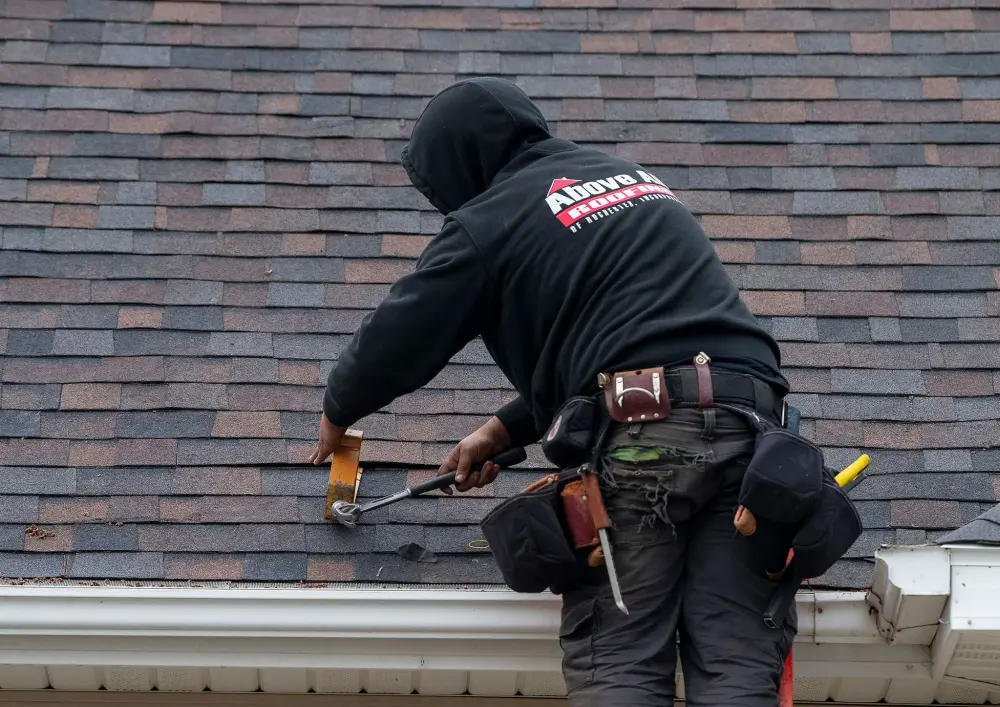
A slope-level repair, where an entire plane of the roof is replaced rather than just a few shingles, is generally more effective than a localized patch. Cutting into a small area of shingles to replace a handful of damaged ones can break the seals on surrounding shingles and create new vulnerabilities. A contractor who recommends a slope replacement rather than a patch is often giving you a more honest assessment of what the work actually requires.
When Replacement Makes More Sense
Replacement is typically the right call when:
- The roof is 15 years or older and has widespread hail damage
- The damage extends across multiple slopes or the majority of the roof surface
- The insurance claim covers the cost of replacement, making repair a poor value by comparison
- The inspection reveals additional system failures beyond the hail damage itself
- The shingles were already showing significant wear before the storm
In Minnesota, where hail seasons are real and recurring, replacing a damaged older roof with a Class 4 impact-resistant shingle is often the most practical long-term decision. It addresses the current damage, reduces risk from future events, and may qualify for an insurance premium discount going forward.
What the Insurance Adjuster Is Looking For
When an insurance adjuster inspects your roof after a hail claim, they are evaluating the same factors your contractor does. They look at impact density, shingle condition, and whether the damage meets their threshold for a covered loss.
Having a licensed roofing contractor present during the adjuster’s inspection is worth doing. A contractor familiar with hail damage patterns can point out evidence that might otherwise be missed, and can help make sure the full scope of damage is captured in the adjuster’s report. This is not about inflating a claim. It is about making sure a legitimate claim is accurately documented.
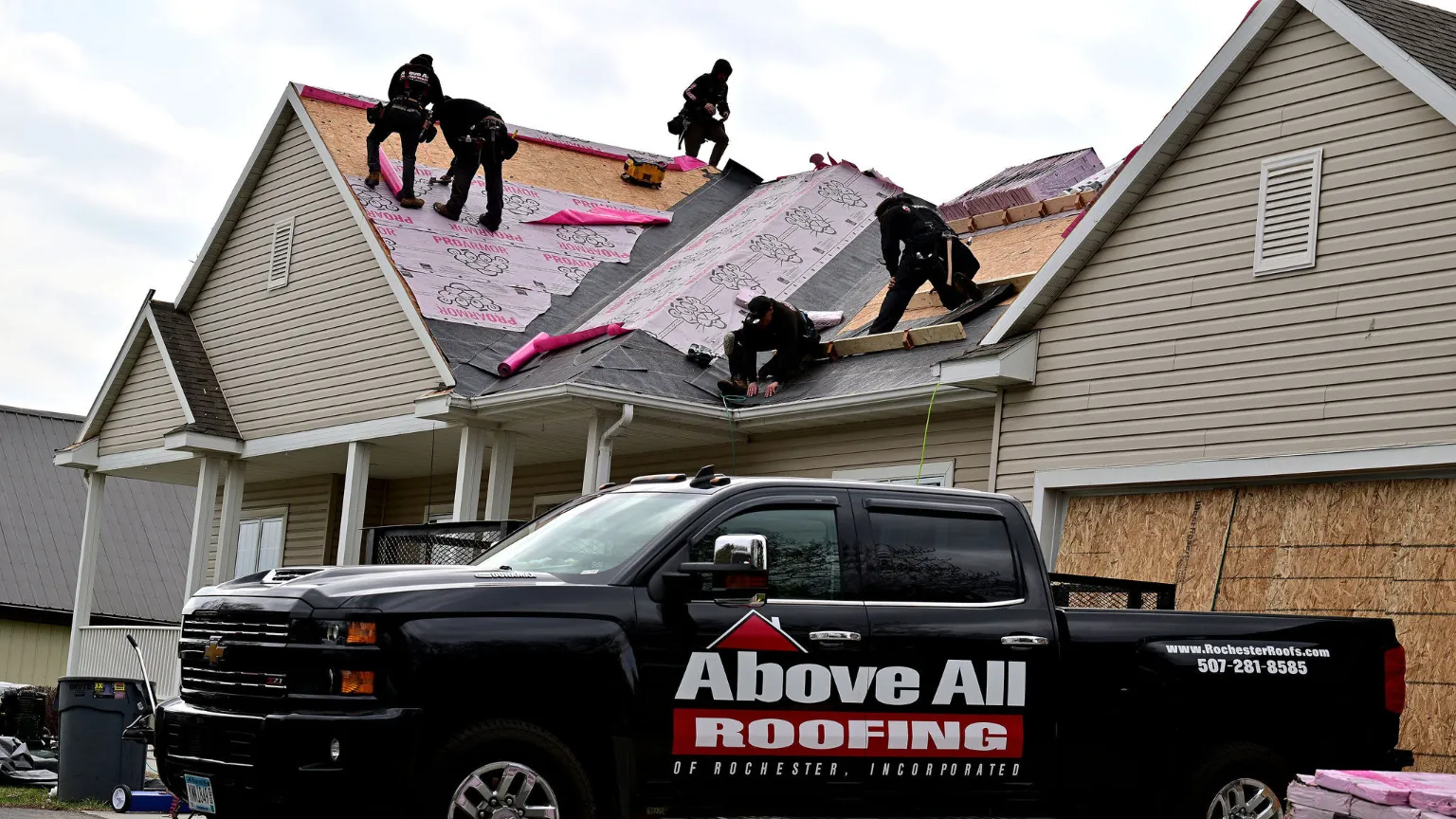
Above All Roofing provides free storm inspections and can accompany homeowners during insurance adjuster visits when requested.
Frequently Asked Questions
How long after a hailstorm can I still file an insurance claim?
Most Minnesota homeowners insurance policies allow one year from the date of the storm to file a claim. Some carriers allow up to two years. Check your specific policy and do not wait.
Can I tell from the ground whether my roof was damaged by hail?
Sometimes. Dented gutters, cracked vent covers, and granules washing out of downspouts are visible indicators. However, shingle-level damage is rarely visible without a professional inspection. Do not assume there is no damage just because you cannot see it from the ground.
What if only part of my roof was hit by hail?
Hail does not always damage a roof evenly. Wind direction and storm track can mean that one slope takes a direct hit while another is relatively unaffected. An inspection documents exactly where the damage is and how significant it is in each area.
Does hail damage always cause leaks?
Not immediately. Granule loss and mat fracturing from hail accelerate shingle deterioration over time, which eventually leads to water intrusion. A roof may not leak for a year or more after a hail event while still having sustained meaningful damage that shortens its remaining lifespan.
Should I call my insurance company or a roofing contractor first?
Call a roofing contractor first. A professional inspection gives you an accurate picture of what happened before you open a claim. It also means you have documentation in hand when the adjuster comes out.
Final Thoughts
Whether hail damage requires repair or full replacement depends on your specific roof, the storm that hit it, and what a qualified inspection reveals. There is no universal answer, and anyone who tells you otherwise without getting on your roof is guessing. Above All Roofing provides free hail damage inspections throughout Rochester and southeast Minnesota. We give you an honest assessment so you can make an informed decision.
Call (507) 281-8585 or visit rochesterroofs.com to schedule your free inspection.