The Answer Depends on More Than Just the Storm
After a storm rolls through Rochester and you suspect your roof took a hit, the first question most homeowners ask is whether insurance will pay for it. The honest answer is that it depends.
Homeowners insurance is designed to cover sudden, unexpected damage from covered perils. In Minnesota, that typically includes hail, wind, lightning, and similar weather events. But coverage is not automatic just because a storm occurred. Several factors determine whether a specific claim will be approved, denied, or paid at a reduced level.
Understanding those factors helps you approach the process with realistic expectations and take the right steps to protect your claim.
What Types of Storm Damage Are Typically Covered?
Most standard homeowners insurance policies in Minnesota cover the following types of storm-related roof damage.
- Hail damage. Impact damage to shingles, vents, gutters, and flashing from a hail event is one of the most common covered claims in southeast Minnesota. The damage does not have to be dramatic to qualify. Even functional damage that accelerates shingle deterioration without creating an immediate leak can be a covered loss.
- Wind damage. Shingles lifted, displaced, or removed by high winds are typically covered. This includes damage from straight-line winds and storm gusts, not just tornadoes or named events.
- Falling debris. Damage caused by a tree branch or other debris landing on the roof during a storm is generally covered under most standard policies.
- Ice dam damage. Water intrusion caused by ice dams may be covered depending on how the policy is written. Some policies cover the interior damage but not the cost of removing the ice dam itself. This is worth reviewing with your agent before winter.
What Types of Damage Are Usually Not Covered?
Coverage has clear limits, and understanding those limits prevents unpleasant surprises after you file.
- Normal wear and tear. Shingles that have simply reached the end of their useful life are not a covered loss. If an adjuster determines that the damage is age-related rather than event-related, the claim will likely be denied.
- Pre-existing damage. Damage that predates your current policy, or that existed before the storm you are claiming, is not covered. This is one reason prompt inspections after storm events matter. Documenting fresh damage before it ages is important.
- Maintenance-related failures. A roof that leaks because of a long-neglected pipe boot or deteriorated flashing is a maintenance issue, not a storm event. Insurance does not cover deferred maintenance.
- Cosmetic damage only. Some policies exclude claims where the damage is purely cosmetic and does not affect the roof’s function. A dented ridge cap that still performs correctly may not meet the threshold for a claim under certain policy language.
How Does an Adjuster Determine Coverage?
When you file a claim, your insurance carrier sends an adjuster to inspect the damage. The adjuster’s job is to evaluate the evidence and determine whether the damage is consistent with the covered event, what the scope of the damage is, and what the appropriate payout should be.
Adjusters look for specific evidence patterns. For hail, they look for impact marks on shingles, dented metal components, and granule loss patterns that are consistent with a storm event rather than normal aging. For wind, they look for lifted or missing shingles and damage patterns that align with wind direction.
The adjuster’s report drives the claim outcome. A thorough report that captures all relevant damage results in a more complete payout. A report that misses items or underestimates scope results in a lower settlement.
Why Having a Contractor Present Matters
Having a licensed roofing contractor present during the insurance adjuster’s inspection significantly improves the documentation process. An experienced contractor knows what hail and wind damage looks like, knows where to look for damage that adjusters sometimes miss, and can articulate findings in terms the adjuster understands.
This is not about inflating a claim. It is about making sure legitimate damage is fully and accurately captured before the adjuster closes their report.
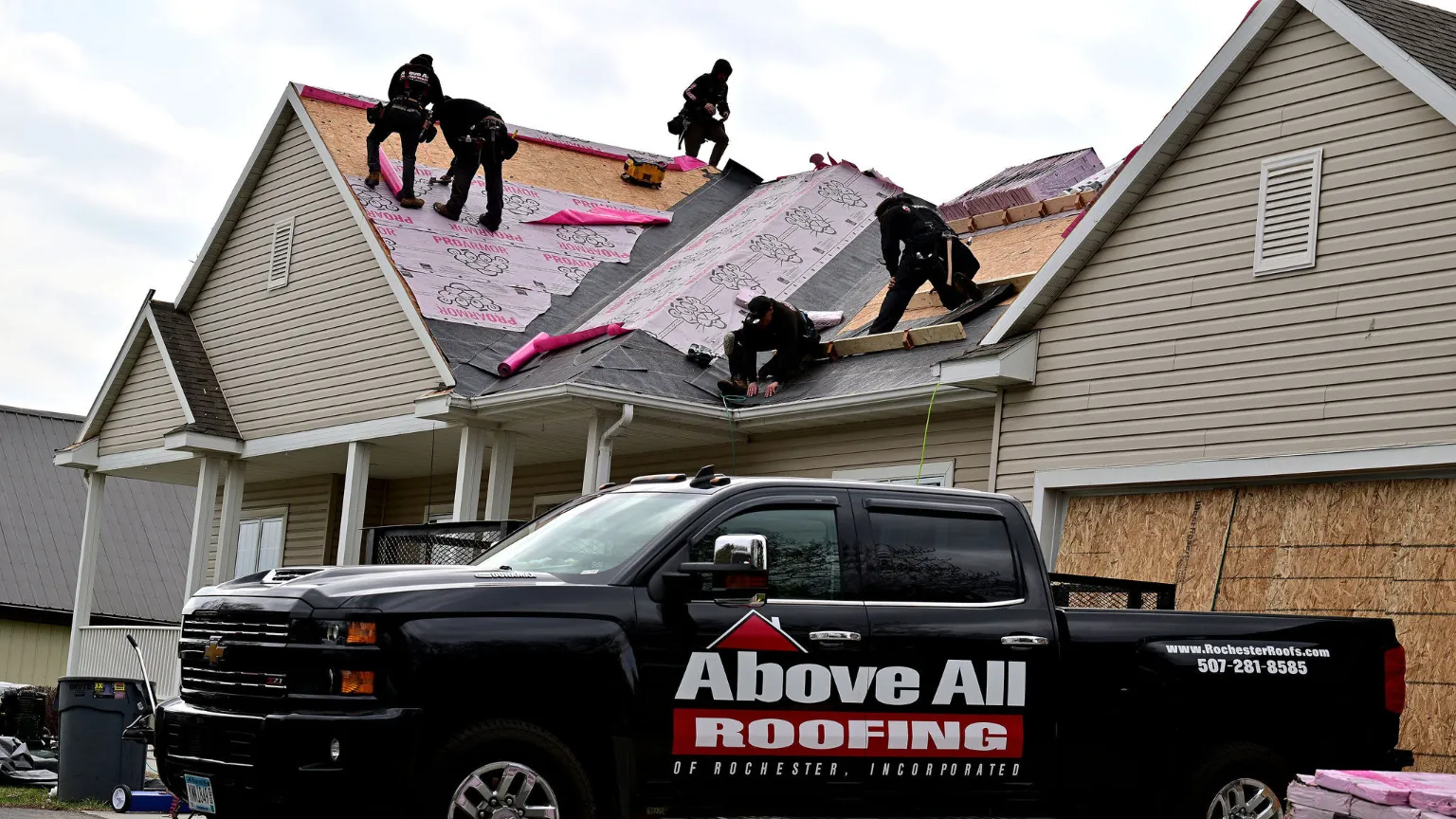
Above All Roofing routinely accompanies homeowners during adjuster inspections in Rochester and southeast Minnesota. We do not negotiate with insurance carriers on your behalf, but we make sure the physical evidence on the roof is clearly identified and documented.
What Documentation Strengthens a Claim?
Strong documentation makes the difference between a complete claim and a partial one.
- Date of the storm. Keep a record of the specific date the weather event occurred. Local news coverage, weather service records, and hail tracking services can document the event officially.
- Pre-storm roof condition. If you have records of a recent inspection or maintenance visit that confirmed the roof was in good condition before the storm, that documentation is valuable. It establishes a clear before-and-after baseline.
- Contractor inspection report. A written inspection report from a licensed roofing contractor, completed promptly after the storm, documents the damage while it is fresh. Photos are part of that report.
- Photos of all damaged components. Shingles, vents, gutters, flashing, and any interior damage should all be photographed before any repairs are made.
- Contractor estimate. A detailed estimate from a licensed contractor gives the adjuster a comparison point and ensures the scope of work is clearly defined.
What Is a Supplement and When Is It Used?
After an adjuster completes their report, the resulting estimate sometimes misses items or undervalues the scope of work. When a licensed contractor reviews the adjuster’s estimate and identifies gaps, they can request a supplement, which is an additional claim for the missed or undervalued items.
Supplements are common and legitimate. They are not an attempt to inflate a claim. They are a correction to an incomplete assessment. Items that are commonly missed in initial adjuster estimates include code-required upgrades, underlayment, drip edge, pipe boot replacements, and ventilation components.
Your roofing contractor should review the adjuster’s estimate before you accept it. If items are missing, a supplement request is the appropriate next step.
What Should You Do If Your Claim Is Denied?
A denial is not always final. If your claim is denied and you believe the damage is legitimate and covered, you have options.
Request a written explanation of the denial from your carrier. Review the denial against your policy language. If the denial is based on a disputed assessment of the damage, request a re-inspection. You can also hire a licensed public adjuster to review the claim independently and advocate on your behalf.
If you believe the denial violates your policy or Minnesota insurance regulations, you can file a complaint with the Minnesota Department of Commerce.
Frequently Asked Questions
Do I need to get multiple contractor estimates before filing a claim?
No. Most carriers do not require multiple estimates. A single detailed estimate from a licensed contractor is typically sufficient. Getting multiple estimates can slow the process without improving the outcome.
Can I choose my own roofing contractor for an insurance claim repair?
Yes. In Minnesota, you have the right to choose the contractor who performs your repairs. Your insurance carrier cannot require you to use a specific contractor.
What if the adjuster and my contractor disagree on the scope of damage?
This is where a supplement request is appropriate. Your contractor documents the disputed items and submits them to the carrier for review. Most carriers have a process for resolving scope disputes. If the disagreement cannot be resolved through that process, invoking the appraisal clause in your policy is another option.
Will filing a storm claim affect my rates?
It may, depending on your carrier and your claims history. Weather claims are often treated differently than at-fault claims, but the impact varies. Talk to your agent before filing to understand how a claim would affect your specific policy.
Is there a deadline for filing a storm damage claim in Minnesota?
Most policies require claims to be filed within one year of the date of the storm. Some carriers allow two years. Check your specific policy and do not assume you have more time than you do.
Final Thoughts
Whether storm damage is covered by your homeowners insurance comes down to the cause of the damage, the terms of your policy, and how well the damage is documented. Getting a professional inspection promptly after any significant storm, understanding your policy before you file, and having a licensed contractor involved in the process all improve your outcome. Above All Roofing provides free storm inspections throughout Rochester and southeast Minnesota.
Call (507) 281-8585 or visit rochesterroofs.com to schedule yours.