Introduction
After a severe storm, many homeowners face the same question: should the roof be repaired or replaced? The answer is not always simple. Storm damage can range from a few missing shingles to widespread hail impact, torn flashing, active leaks, or compromised roof decking.
In Rochester, MN and surrounding Southeast Minnesota communities, roofs experience wind, hail, snow, heavy rain, and freeze thaw cycles. These conditions can make storm damage worse if it is not addressed quickly. Some issues can be corrected with targeted repairs. Others may indicate that the roof system is no longer reliable enough to protect the home.
Choosing between repair and replacement requires more than a quick look from the ground. Homeowners need to consider the roof’s age, extent of damage, material condition, insurance coverage, and long term cost. This guide explains how to think through the decision after storm damage.
Understanding How Storm Damage Affects a Roof
Storms can damage a roof in several ways.
High winds may lift shingles, break adhesive seals, loosen flashing, or remove roofing materials entirely. Hail can bruise shingles, knock away protective granules, crack roofing materials, and weaken the system without creating an immediate leak. Heavy rain can expose weak points around vents, chimneys, valleys, and roof edges.
Storm damage may affect:
- Shingles
- Flashing
- Gutters
- Ridge caps
- Roof vents
- Underlayment
- Decking
- Attic insulation
Some damage is visible right away. Other damage stays hidden until the next rainfall or winter freeze. This is why a professional roof inspection is often the first step after severe weather.
When Roof Repair Is the Right Choice
Roof repair is often the best option when the damage is limited and the rest of the roofing system is still performing well.
Repair may make sense when:
- Only a few shingles are missing
- Damage is isolated to one area
- Flashing needs resealing or replacement
- The roof is relatively new
- There are no signs of structural damage
- The roof has not had repeated leaks
In these situations, a targeted repair can restore protection without the cost of replacing the entire roof.
For example, if a windstorm removes several shingles from one slope, but the roof is otherwise in good condition, repairing that section may be the most practical option.
The goal is to fix the damage before water reaches the underlayment, decking, or interior of the home.
When Roof Replacement Is the Better Option
Roof replacement may be the better long term decision when storm damage is widespread or when the roof was already nearing the end of its service life.
Replacement may be recommended when:
- Hail damage affects multiple roof slopes
- Many shingles are cracked, bruised, or missing
- Leaks are occurring in several areas
- The roof decking is damaged
- The roof is 20 years old or older
- Repairs would only provide a temporary solution
- Similar problems keep returning
A roof that has widespread storm damage may not be able to provide consistent protection even after multiple repairs. In some cases, patching one section simply delays larger work that will soon be needed anyway.
Replacement gives the home a complete new roofing system designed to work together as one protective layer.
How Roof Age Affects the Decision
Roof age is one of the most important factors in deciding whether to repair or replace.
A newer roof with localized storm damage is often a good candidate for repair. An older roof with storm damage may require a different approach.
As roofs age, shingles become more brittle, lose granules, and become less resistant to wind, hail, and moisture. Even if the storm damage appears limited, the surrounding materials may already be weakened.
For many asphalt shingle roofs in Minnesota, the expected lifespan is commonly around 20 to 30 years depending on materials, installation quality, ventilation, and maintenance.
If the roof is already near the end of its expected lifespan, roof replacement may provide better value than continuing to invest in repeated repairs.
The Role of Hail Damage
Hail damage is one of the most common reasons homeowners question whether repair or replacement is needed.
Hail may create:
- Bruised shingles
- Cracked shingles
- Granule loss
- Exposed matting
- Dented vents
- Damaged flashing
The challenge is that hail damage is not always easy to see from the ground. Shingles may look normal from a distance while the impact has weakened the protective surface.
If hail damage is isolated, repair may be possible. If hail has affected large portions of the roof, replacement may be the more appropriate solution.
A professional assessment helps determine the extent of the damage and whether the roof still has reliable remaining life.
The Role of Wind Damage
Wind damage can also influence the repair versus replacement decision.
Wind can lift shingles without fully removing them. Once the adhesive seal is broken, the shingles may become more vulnerable during future storms.
Wind damage may require replacement if:
- Shingles are lifted across large areas
- Multiple slopes are affected
- Ridge caps are damaged
- Flashing has separated
- Water intrusion has already occurred
If the damage is limited to one section, repair may be enough. If wind has compromised large portions of the roof, replacement may provide better long term reliability.
Interior Leaks and Structural Concerns
Interior leaks are a sign that water has already entered the roofing system.
Homeowners should look for:
- Ceiling stains
- Wet insulation
- Peeling paint
- Musty odors
- Damp attic areas
- Mold growth
A single small leak does not always mean replacement is necessary. However, multiple leaks or signs of structural damage require more careful evaluation.
If decking, rafters, or insulation have been damaged, the project may go beyond a simple exterior repair.
Addressing structural concerns properly is essential for protecting the home.
Insurance Considerations After Storm Damage
Storm damage may be covered by homeowners insurance, depending on the policy and circumstances.
A professional inspection can help document:
- Type of damage
- Storm-related impact
- Affected areas
- Photos and condition notes
- Recommended repair or replacement scope
This documentation can be helpful when working with the insurance company.
Homeowners should also review their policy to understand:
- Deductible amount
- Replacement cost coverage
- Actual cash value coverage
- Filing deadlines
- Exclusions or limitations
Insurance coverage should not be the only factor in the decision, but it can influence the timing and affordability of repairs or replacement.
Why Multiple Repairs Can Cost More Over Time
Many homeowners choose repair because it costs less upfront. In some cases, that is the right decision. But when a roof has repeated storm damage or is nearing the end of its lifespan, multiple repairs can become expensive over time.
Repeated repairs may lead to:
- Ongoing service calls
- Mismatched materials
- Unresolved underlying issues
- Continued leak risk
- Higher long term costs
If repairs are becoming frequent, replacement may be the more cost-effective solution.
The goal is not simply to choose the least expensive option today. The goal is to choose the option that protects the home best over the next several years.
How Replacement Can Improve Long Term Value
Roof replacement can offer several long term benefits after major storm damage.
Benefits may include:
- Improved weather protection
- Better energy efficiency
- Updated materials
- Stronger warranty coverage
- Improved curb appeal
- Increased buyer confidence if selling
- Reduced emergency repair risk
For homeowners planning to stay in the home long term, replacement may provide greater peace of mind and better overall value.
For churches and commercial properties, replacement can also support long term facility planning and reduce disruptions caused by recurring leaks.
Why a Professional Roof Inspection Is the First Step
Homeowners should avoid making repair or replacement decisions based only on what is visible from the ground.
A thorough inspection evaluates:
- Shingle condition
- Flashing integrity
- Vent and pipe boot condition
- Roof valleys
- Gutters and drainage
- Decking condition
- Signs of attic moisture
- Storm damage patterns
This information helps determine whether repair or replacement is the better solution.
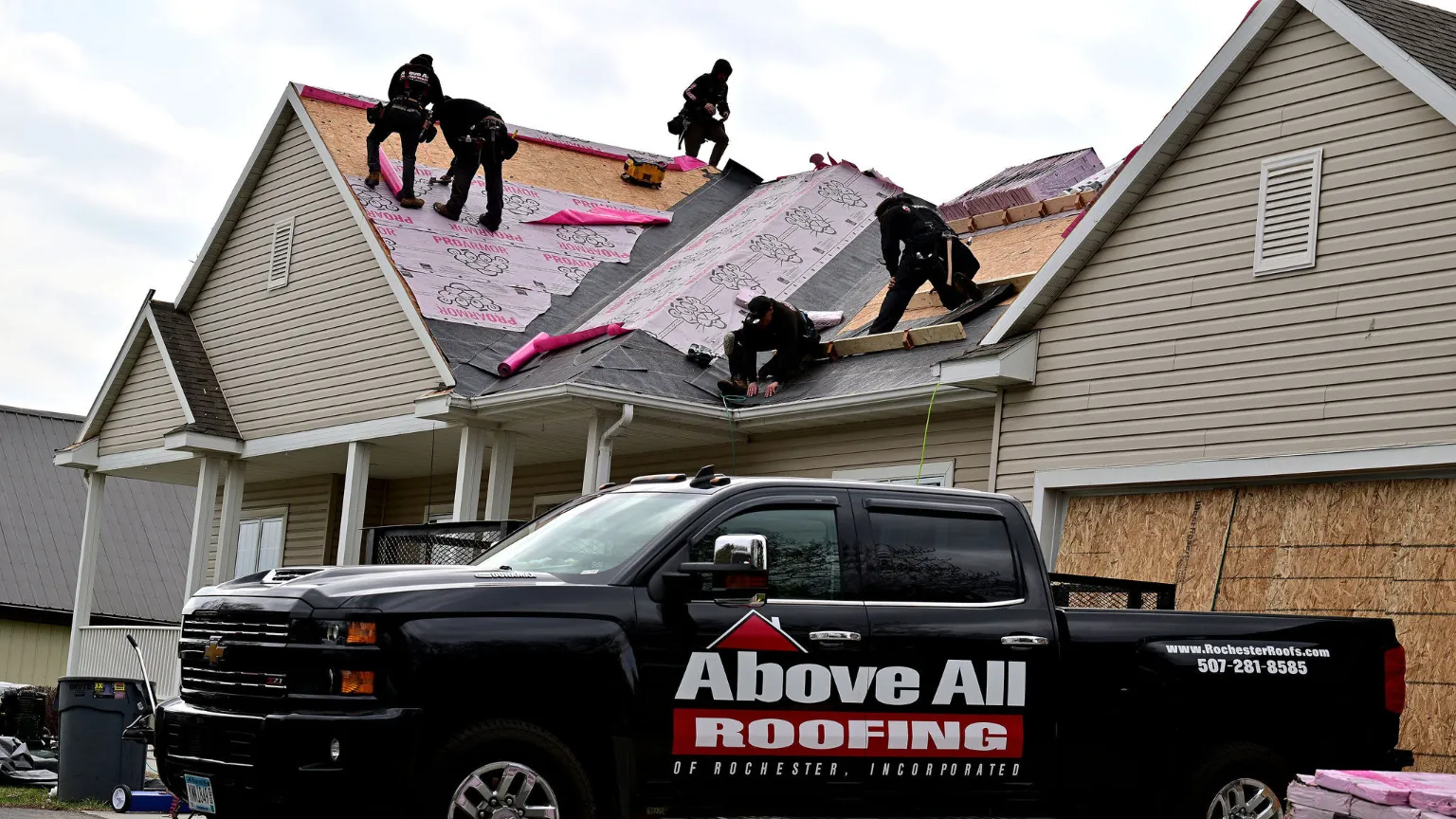
Above All Roofing provides roof inspection, roof repair, roof replacement, and storm damage restoration services throughout Rochester, MN and surrounding Southeast Minnesota communities.
Working With a Local Roofing Contractor
Storm damage decisions require local knowledge.
A local roofing contractor understands:
- Rochester storm patterns
- Minnesota freeze thaw cycles
- Hail damage concerns
- Snow and ice risks
- Local roofing standards
- Insurance documentation needs
Above All Roofing works with homeowners, churches, commercial property owners, and facility managers to evaluate storm damage and recommend practical next steps.
The focus is on protecting the building long term, not pushing unnecessary work.
Conclusion
After storm damage, the decision to repair or replace your roof depends on several factors. Minor, localized damage on a newer roof may only require repair. Widespread storm damage, recurring leaks, structural concerns, or an aging roofing system may make replacement the better long term option.
The most important step is getting a professional roof inspection so the full extent of the damage is understood. With the right assessment, homeowners can make a confident decision that protects their property, budget, and peace of mind.
Frequently Asked Questions
How do I know if storm damage requires roof replacement?
Roof replacement may be needed when damage is widespread, multiple leaks are present, or the roof is near the end of its lifespan.
Can storm damage be repaired without replacing the whole roof?
Yes. If damage is limited to one area and the roof is otherwise healthy, targeted repair may be sufficient.
Should I call insurance before or after a roof inspection?
Many homeowners schedule a professional inspection first so they understand the damage before contacting insurance.
Can hail damage require full roof replacement?
Yes. If hail damage affects multiple roof slopes or weakens large areas of the roofing system, replacement may be recommended.
Is it cheaper to keep repairing an older roof?
Not always. Repeated repairs on an aging roof can become more expensive over time than replacing the roof.